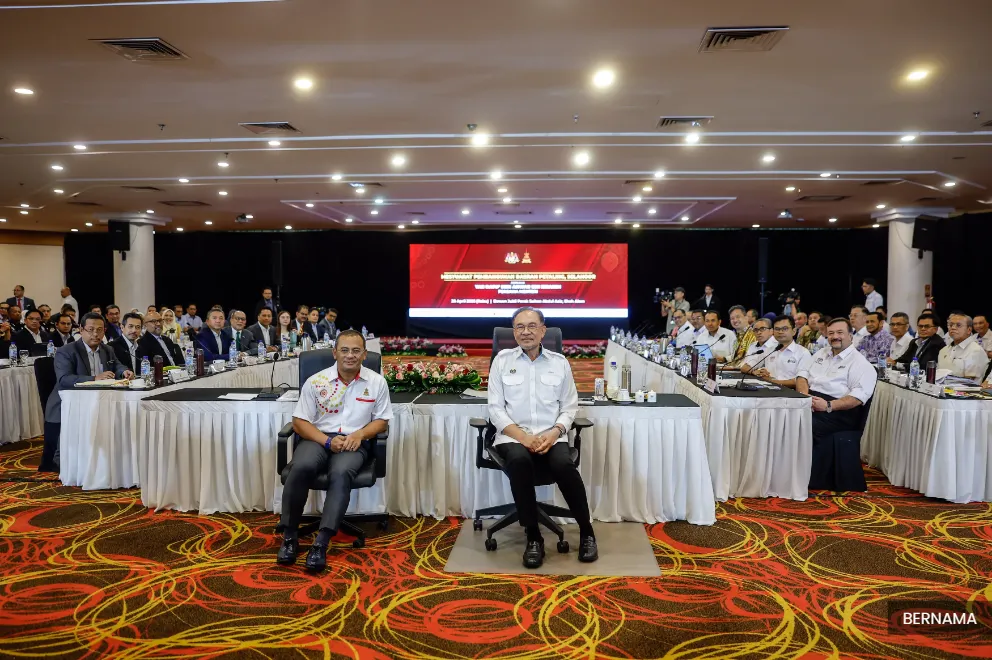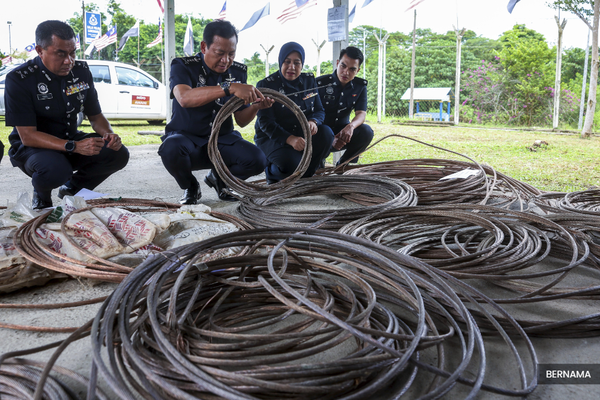
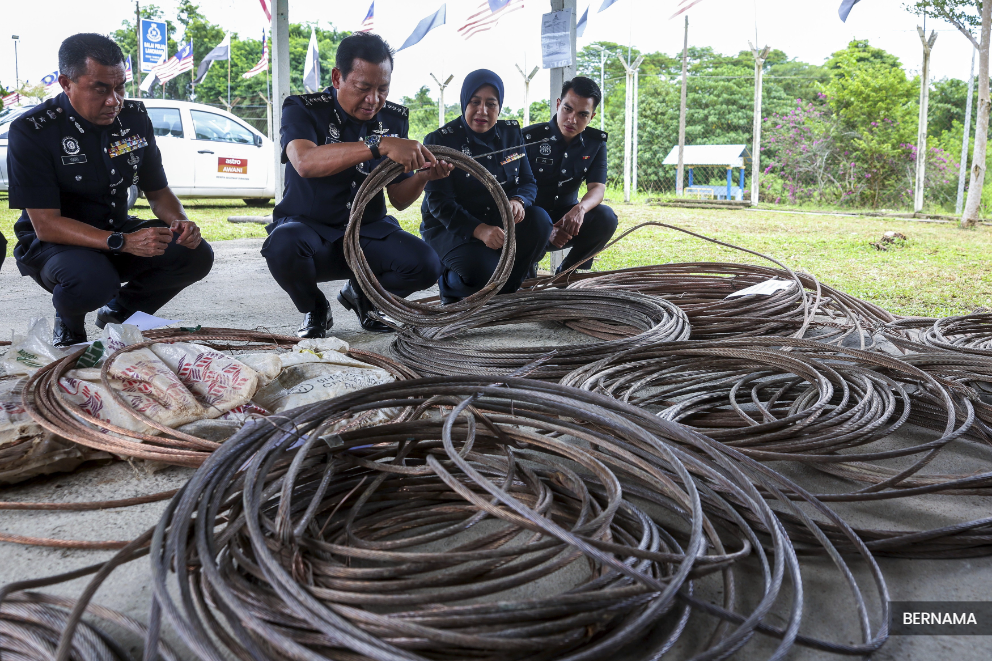
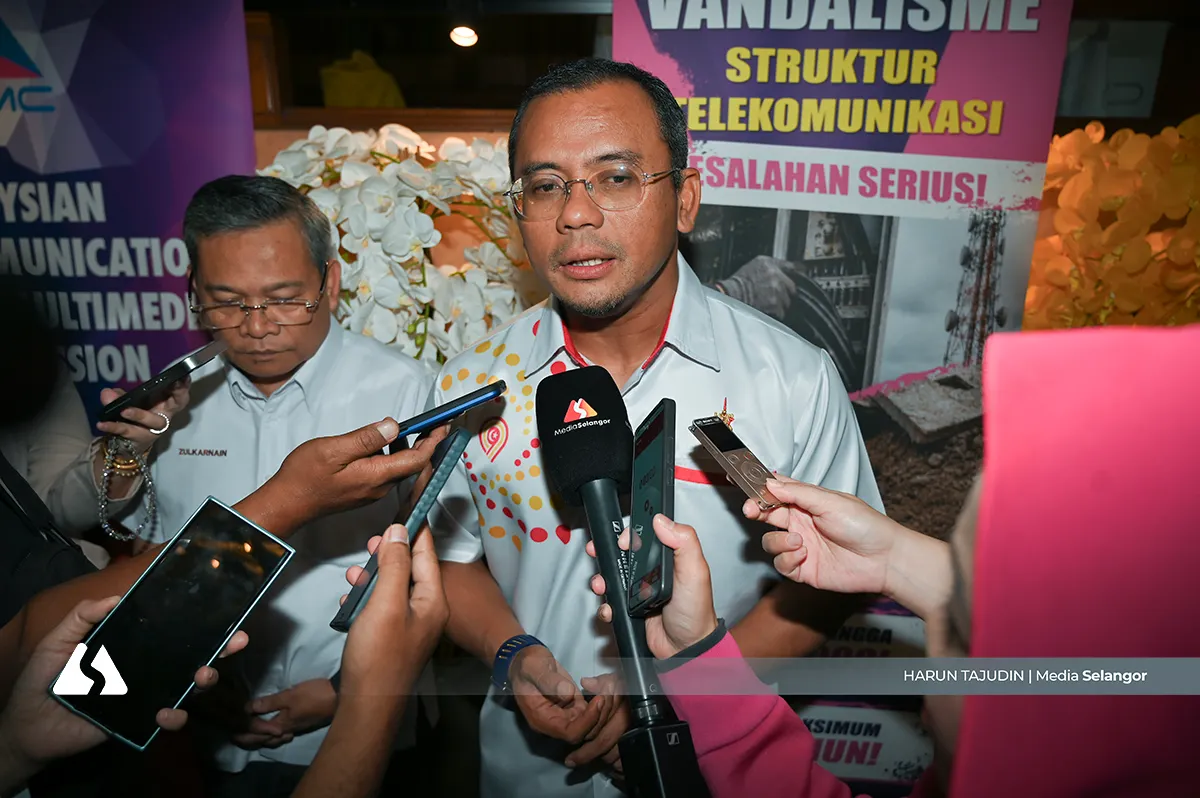
SHAH ALAM, May 19 — Local communities have been urged to play a more active role in providing early information to help authorities combat cable theft and vandalism involving telecommunications infrastructure in Selangor.
Menteri Besar Dato' Seri Amirudin Shari said public cooperation is crucial to ensure immediate action can be taken to prevent acts of sabotage, which not only damage public facilities but also disrupt the public’s digital access.
“We (the state government) want the public to be involved so that cable theft activities, including vandalism against digital facilities, can be reduced. As I mentioned, digital infrastructure is important for sustaining daily life in the state of Selangor.
“Integrated measures mobilised at the grassroots level are crucial to ensuring that every piece of the state’s digital infrastructure is continuously protected from sabotage threats,” he said after launching the state-level Telecommunications Infrastructure Vandalism Prevention Campaign 2026 today.
Amirudin added that such efforts need to be strengthened to ensure the continued protection of Selangor's digital infrastructure, following a high number of incidents recorded over the past year.
According to the Malaysian Communications and Multimedia Commission (MCMC), Selangor remains among the states recording the highest number of cases in Malaysia, with 1,836 cases reported in 2024, followed by 1,273 cases last year.
MCMC senior advisor (operations) Datuk Zurkarnain Mohd Yasin, who was also present at the launch, said the impact of physical damage to infrastructure has been significant, with the telecommunications industry incurring losses exceeding RM20 million annually for repair works.
Several areas in Selangor have also been identified as high-risk locations experiencing repeated incidents, including Rawang, Gombak, Bangi, the Sungai Tekali area, and Hulu Langat, where service disruption periods are longer and involve critical components such as microwave transmission and certain network equipment.
“Spare parts need to be ordered from overseas, and the delivery and reinstallation process requires an additional time of between one and three years before services can be fully restored. This situation directly affects the stability of telecommunications services and impacts users and communities,” he said.
Zurkarnain noted that they are actively working to ensure more effective enforcement actions by strengthening prevention strategies through engagement sessions in hotspot areas.
This approach can foster closer cooperation with various parties, including the Royal Malaysia Police, village heads, community leaders, residents’ associations, and local communities, in efforts to raise awareness and encourage the reporting of suspicious activities to the authorities.