BEIJING/WASHINGTON, May 13 — China and the United States (US) are considering extending a truce on Chinese rare earth export curbs at a leaders' summit this week, but Chinese customs data shows Beijing is still throttling shipments of the materials vital for defence and manufacturing.
The resulting shortages and higher prices around the world underscore how controls imposed in retaliation for President Donald Trump's Liberation Day tariffs have become one of the policy's major legacies, long after most of the duties were scaled back.
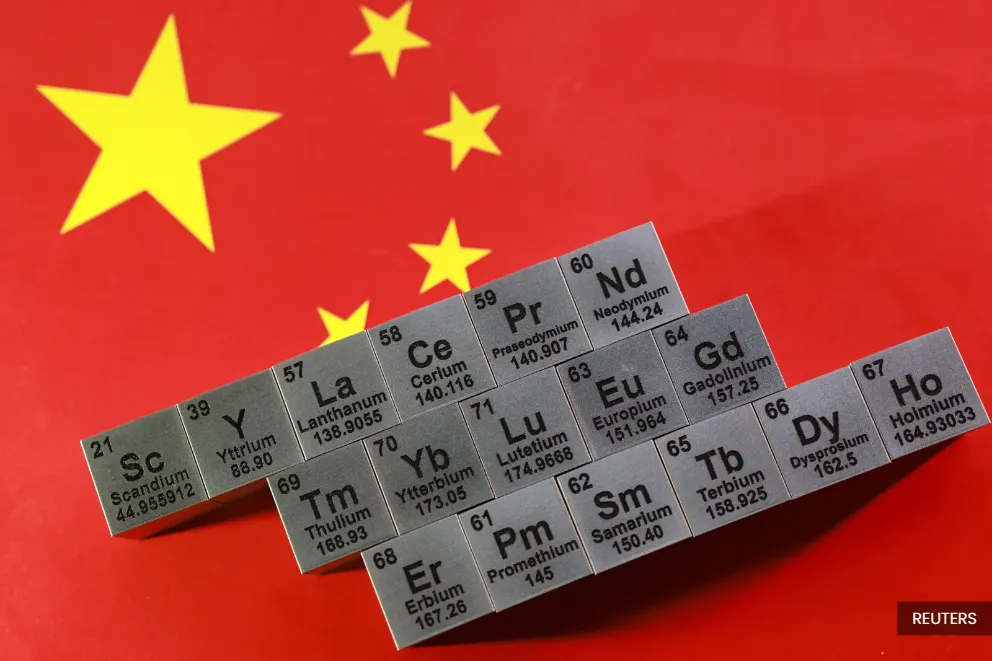
Beijing's controls remain the tightest for several speciality rare earths, produced at scale only in China and used in aerospace, defence, semiconductors, and powerful magnets found in electronics and manufactured goods, including electric cars.
Chinese customs data have revealed that exports of the heavy rare earths yttrium, dysprosium, and terbium remain down by some 50 per cent since controls were imposed in April 2025, compared with the 12 months prior.
The amounts in question are often measured in the tens of tonnes, and their decline has been obscured by an almost complete rebound in total rare earth exports over the past year.
"Headline export volumes can be misleading. China appears to be selectively licensing exports while preserving leverage over supply chains considered strategically sensitive, particularly where defense or advanced technology applications are involved," said consultancy Arthur D. Little's senior principal Ilya Epikhin.
These shortages appear at odds with what the White House says China agreed to at a summit in South Korea last October: "effectively eliminate China's current and proposed controls on rare earth elements."
China rolled back a wider set of restrictions after the summit but left its April 2025 controls in place. Beijing has repeatedly defended them and says it approves eligible requests.
Its Commerce Ministry did not respond to questions from Reuters.
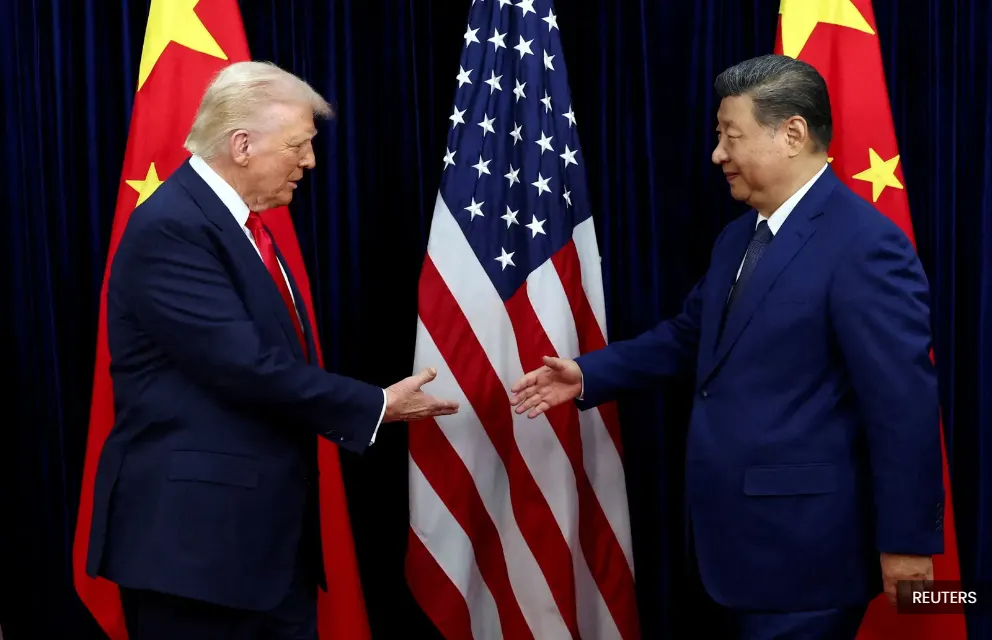
The gap between those positions and a possible extension of the October deal will be on the agenda when the leaders meet again this week, alongside possible Chinese purchases of Boeing aeroplanes and US agricultural and energy products.
On Sunday, a senior US official told the media that conversations with Beijing on rare earths continued and that both sides wanted stability, although it was unclear whether the agreement would be extended during or after Trump's visit.
Separately, a second US official, speaking anonymously, told Reuters that shortages remain a problem.
A third US official, who also declined to be named because they were unauthorised to speak to the media, said that the White House recently had to intervene with Beijing to secure approvals for a large US firm with defence and civilian units that was losing hundreds of millions in revenue a month because it could not get an export license.
In February, Reuters reported that some US aerospace companies had temporarily paused production due to shortages of yttrium, used to protect turbine blades from heat.
"The President's team is engaging continuously with China to ensure the flow of rare earths while building out trusted and resilient supply chains," a White House official said in response to Reuters' questions on the issue.
Hurting US allies
While the controls were introduced in retaliation against Trump's tariffs, their impact is being felt just as much by US allies as by Washington.
Data from the consultancy Argus indicated that prices outside China since April 2025 have soared four- to fivefold for dysprosium and terbium, and about 140-fold for yttrium, and continue to climb.
Similarly, Chinese customs data show that major consumers of Chinese rare earths, such as Japan and Germany, are also being cut off to a degree that, in some cases, is more drastic than in the US.
Dysprosium is commonly added to magnets to increase strength, and since April 2025, Japan, the largest rare-earth magnet maker outside China, has received just four per cent of the dysprosium it imported over the 12 months prior. Germany has received none.
Benchmark Mineral Intelligence's rare earth research manager Neha Mukherjee said that manufacturers are now paying between 1.5 and three times more for magnets than before the controls.
Germany and Japan, along with the US and other countries, are investing in projects to diversify away from China, including a recent G7 initiative on alternative supply chains.
But the consultancy Project Blue's research director David Merriman noted that full replacement of China is still years away.
"The situation looks set to get worse before getting any better," he said.