
KUALA LUMPUR, May 10 — The government’s decision to tighten control over non-critical spending, including holding official events on a modest scale, demonstrates a proactive approach and fiscal discipline that could strengthen Malaysia's economic resilience amid geopolitical uncertainty and global economic pressures.
Universiti Teknologi MARA's Administrative Science and Policy Studies Faculty senior lecturer and public policy expert Asiyah Kassim said the approach is timely given the increasingly challenging global uncertainty.
It represents a two-pronged strategy to optimise the use of public financial resources without compromising the quality of public service delivery.
“The move to reduce non-critical expenditure reflects prudent fiscal management and spending discipline amid global uncertainty.
“In the context of the West Asian conflict, which could potentially affect energy prices, supply chains, and market sentiment, this step is appropriate as a pre-emptive stabilisation instrument,” she told Bernama when contacted.
Asiyah added that from a public policy perspective, the effectiveness of the measure depends on accurately targeting genuinely non-critical expenditure cuts so that they do not disrupt essential services or the efficiency of implementation.
“If both aspects — accurate targeting and implementation efficiency — are fulfilled, the measure will be effective and principled, not merely fiscal cosmetics,” she said, emphasising the importance of transparent implementation.
Commenting on the impact of reducing official visits and implementing Work From Home (WFH) practices, Asiyah said the move sends an important behavioural economics signal that helps build policy legitimacy among the public.
“The indirect impact, or signalling effect, is more significant from a behavioural economics standpoint because it signals that the government is practising inclusive cost-saving measures that are also adopted at the leadership level,” she said.
Meanwhile, Universiti Kuala Lumpur Business School's Assoc Prof Aimi Zulhazmi Abdul Rashid described the government’s proactive action as a much-needed measure.
This comes as the government’s fiscal space is becoming increasingly constrained, with debt levels approaching 65 per cent of gross domestic product, and amid the risk of a “twin shock” arising from the crisis in West Asia.
He suggested the government rationalise the budget by distinguishing more carefully between operating expenditure and capital expenditure to support long-term economic growth.
“Protect the three key sectors: health, defence, and food and energy security. Do not reduce allocations in these areas,” Aimi said.
He believes the prudent approach will boost confidence among investors and international financial institutions such as the International Monetary Fund (IMF) and the World Bank in Malaysia’s financial management.
“Controlling non-critical expenditure will give confidence to foreign and domestic investors, as well as international financial institutions such as the World Bank and IMF, and international rating agencies like Moody’s and S&P (Standard & Poor’s), that the government is proactive and acting wisely in addressing the energy crisis,” Aimi said.
Meanwhile, social activist Tan Sri Lee Lam Thye fully supported the move but cautioned against cutting costs at the expense of basic human welfare.
“It is the right move to take in the wake of the many challenges facing us. It is the right time for an austerity drive involving all ministries, departments, and agencies. We must spend prudently.
“No wastage of public funds. Costs need to be cut, but not at the expense of basic human needs such as food, health, housing, and welfare. Most importantly, there must be no more leakages and corruption,” he said.
Previously, the Finance Ministry said that guidelines on adjusting operational expenditure had been issued to all ministries to ensure that activities carried out align with the government’s intention to practise prudent spending.
The measure is part of a prudent fiscal management approach to ensure the government has sustainable support to continue helping the people cope with the rising cost of living.
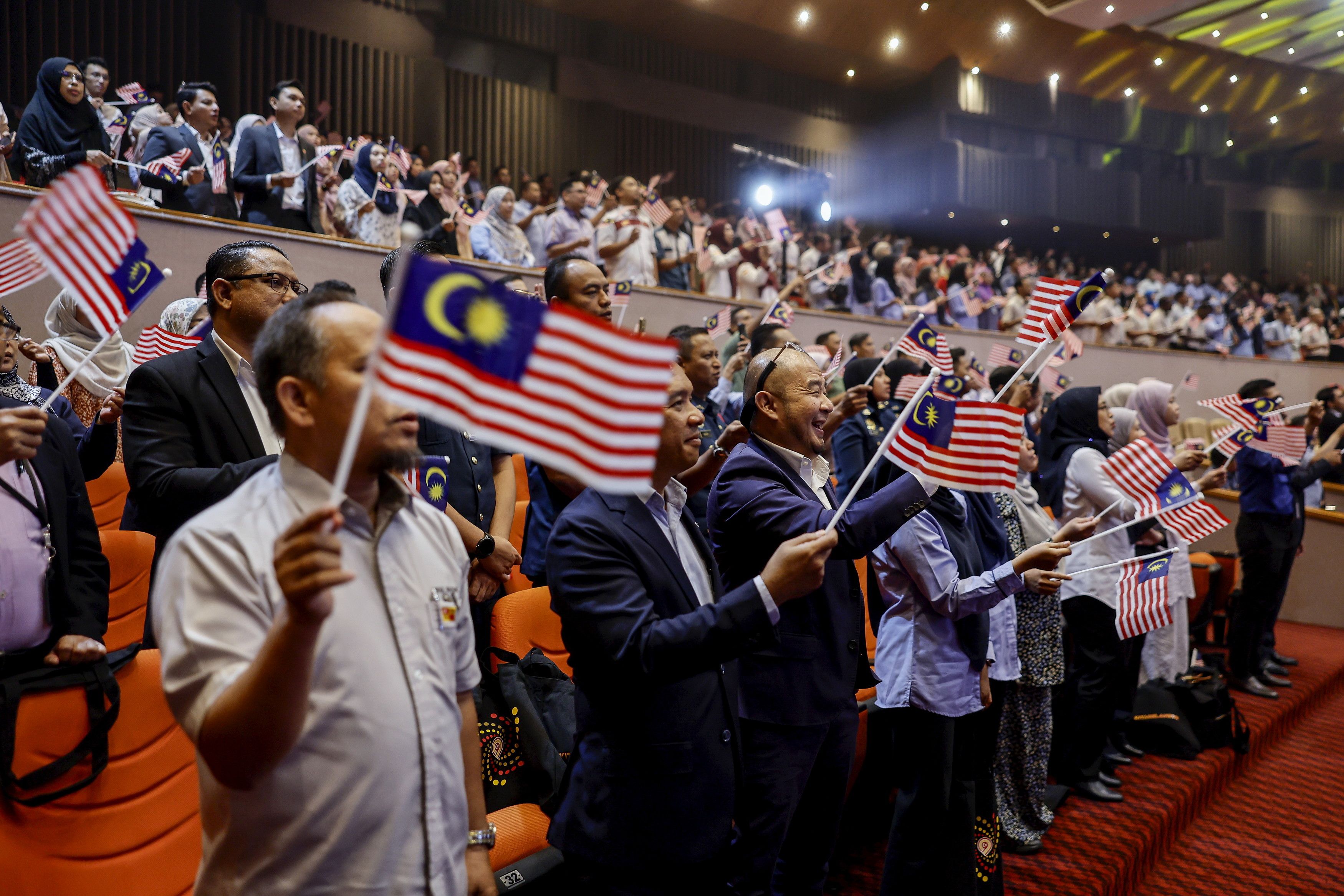
Prime Minister Datuk Seri Anwar Ibrahim’s directive for ministries, agencies, and government-linked investment companies and corporations to scale back official events is expected to foster a culture of more responsible, integrity-driven governance in the public sector.