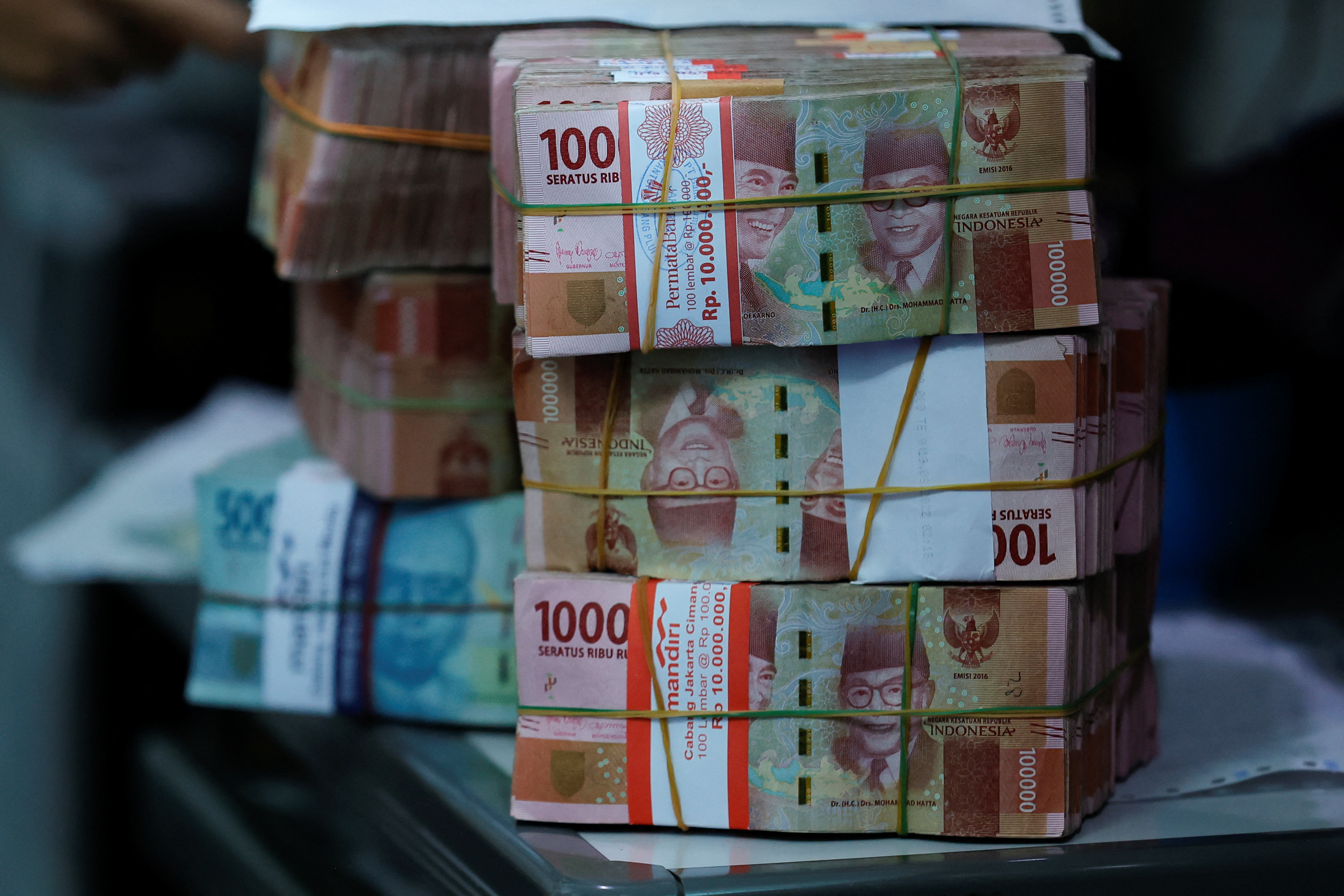
JAKARTA, May 5 — Indonesia’s economy expanded 5.61 per cent year-on-year (y-o-y) in the first quarter of 2026, driven mainly by resilient domestic demand.
ANTARA News Agency reported that Statistics Indonesia (BPS) head Amalia Adininggar Widyasanti said the growth exceeded the first-quarter figures recorded since 2021.
“If we look at the first quarter of 2026, at 5.61 per cent, it is the highest (economic) growth (rate),” she said today.
The economic growth rates for the first quarters between 2021 and 2026 had never exceeded 5.61 per cent.
Amalia noted that first-quarter growth had gradually improved in recent years. It reached 5.03 per cent in 2022, 5.04 per cent in 2023 and 5.11 per cent in 2024, before easing slightly to 4.87 per cent in 2025.
However, on a quarter-on-quarter (q-o-q) basis, the economy fell 0.77 per cent against the fourth quarter of 2025, reflecting seasonal trends.
Household consumption remained the largest contributor to growth. It accounted for 2.94 percentage points, supported by increased mobility during national holidays and major religious festivities.
She added that various government measures, including inflation-control policies, transport fare discounts, and the disbursement of holiday allowances, also helped sustain consumption.
Bank Indonesia’s benchmark interest rate, at 4.75 per cent, further supported domestic demand.
Separately, Finance Minister Purbaya Yudhi Sadewa reported that state revenue reached Rp574.9 trillion (RM130.5 billion) while government spending was Rp815 trillion (RM185 billion), resulting in a fiscal deficit of Rp240.1 trillion (RM54.5 billion).
“The deficit reached Rp240.1 trillion, or 0.93 per cent of the gross domestic product, as of March 31, 2026,” he said.
State revenue realisation accounted for 18.2 per cent of the full-year’s budget target, growing 10.5 per cent y-o-y.
“Tax revenue was recorded at Rp462.7 trillion, growing 14.2 per cent y-o-y. Tax receipts amounted to Rp394.8 trillion, growing 20.7 per cent y-o-y, while customs and excise revenue was Rp67.9 trillion, declining 12.6 per cent y-o-y,” Purbaya said.